
People & Performance
Wellbeing
A prevention-first wellbeing offer — addressing the organisational and operational stressors that drive psychological distress and burnout, before harm occurs.
The offer
- What it is
- Wellbeing built on Health Oriented Leadership — leaders' own health and their people's, treated as one leadership responsibility. One comprehensive benchmarking and organisational review, and five further pieces of work: take them as the review's prioritised recommendations, or take any one of them on its own.
- Why it matters
- People are damaged by how the organisation is run — pace, workload, shift patterns, unfairness — as well as by the incidents they attend. Preventing that harm costs less than treating it, and it is the right way round.
- How we deliver it
- Our BPI™ and GAIN Model™ tools and our programmes were built and used in policing, then adapted for other sectors and other jurisdictions. They were designed with Oscar Kilo, the IACP, GLWS and ResetU, and they are delivered by people who have led under pressure.
- What to expect
- Start with the comprehensive review, or go straight to any single piece of work. Either way you get an evidenced picture of where your wellbeing effort will make the biggest difference, priorities you can defend to your board, and a named GCG consultant who stays with you.
Led by our Experts
We have sourced the world’s best policing and emergency services SMEs. Wellbeing is led by Stuart Bartels APM and Andrew Rhodes OBE QPM.
-
GCG Consortium
 Australia
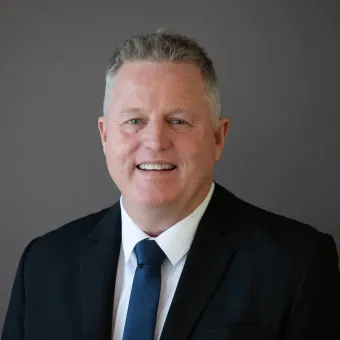
Stuart Bartels APM
GCG Group Managing Director and Founder Partner
Stuart (Stu) Bartels APM is a co-founder of the Global Consortium Group (GCG) and head of its Leadership Development Practice. Former Executive Director of the Australian Institute of Police Management, he had a 36-year policing career, including as WA Police Acting Assistant Commissioner, and is a recipient of the Australian Police Medal.
Skills & focus
- Leadership development
- Executive education
- Policing & public safety leadership
- Global partnership development
- ICT & organisational reform
Years of service 36
-
GCG Consortium
 United Kingdom

Andrew Rhodes OBE QPM
GCG Health & Wellbeing Senior Advisor
Andrew Rhodes OBE QPM is Service Director of Oscar Kilo, the National Police Wellbeing Service for England and Wales, National Police Chiefs' Council Lead for Policing Wellbeing, and former Chief Constable of Lancashire Constabulary. He conceived the UK's first national benchmarking tool for organisational wellbeing; it now underpins the nationally mandated wellbeing standards for policing in England and Wales.
Skills & focus
- Workforce wellbeing
- Wellbeing standards & benchmarking
- Policing & health collaboration
- Executive policing leadership
- Crisis management & CT command
Delivered by our Experts 2 supporting members


 United States
Who this is for
Built for organisations operating in high-risk, high-pressure environments. Policing is the founding market and the main source of evidence; the same approach applies to health, other emergency services and private industry — particularly private security.
GCG Wellbeing — the product behind this offer
This work is delivered as GCG Wellbeing, our public safety wellbeing product — built on Health Oriented Leadership and designed with Oscar Kilo, the IACP, the Global Leadership Wellbeing Survey and ResetU. The product page sets out the evidence on what causes psychological harm at work, and our three-stage approach: Awareness, Value, Behaviour.

Endorsed by Oscar Kilo
GCG Wellbeing is endorsed by Oscar Kilo, UK policing's National Police Wellbeing Service, and was designed with Oscar Kilo World, its international arm. Andrew (Andy) Rhodes OBE QPM built Oscar Kilo and ran it across the United Kingdom. He is our ambassador and Health & Wellbeing Senior Advisor, Oscar Kilo's Service Director, national lead for policing wellbeing at the National Police Chiefs' Council, and a former Chief Constable of Lancashire Constabulary.
That endorsement matters because Andrew built the evidence base this offer runs on. As national lead for policing wellbeing he set up policing's first national wellbeing portfolio in 2014 and secured Home Office funding for Oscar Kilo in 2016. The programme that followed covers trauma intervention management, psychological surveillance, peer support training, first-line management training and executive development. He also conceived the Blue Light Wellbeing Framework, the UK's first national tool letting forces assess and improve their own wellbeing provision, and led its development — with the Chief Medical Officer for Policing — into the Workforce Prioritisation Guidance that now underpins the mandated wellbeing standards for Home Office forces.
He continues to oversee the National Police Wellbeing Survey, which drew more than 55,000 responses in 2026. He chairs the National Police Wellbeing Service Board and the Police Covenant Delivery Group, and leads the Royal Foundation's Blue Light Together programme team, which is setting one standard of mental health support across the UK's emergency services and for responders' families.
The same model runs through everything on this page: prevention first, benchmarked against a standard, and built to survive governance scrutiny. What was tested and then mandated across policing in England and Wales is what GCG takes to police and emergency services elsewhere, and to any organisation whose people carry chronic operational strain.
What we do on wellbeing
One comprehensive review, and five further pieces of work. The review will recommend the ones you need — or you can take any of them on its own.
Capability 01
Benchmarking & Organisational Review
One comprehensive review of your organisation's preventative wellbeing position — every other wellbeing solution can fall out of it as a prioritised recommendation.
What it is
Using our BPI™ and GAIN Model™ tools — built and used in policing, then adapted for other sectors and other jurisdictions — we assess your organisation's preventative wellbeing position with you. A named GCG consultant runs the whole process: discovery introduces the GAIN Model and maps your needs; a BPI benchmarking review measures your prevention provision against sector good practice; the two are then read together and turned into a ranked improvement plan you can act on.
Why it matters
Burnout and fatigue build organisationally, not overnight — and you cannot prioritise what you have not measured. A ranked, evidence-based picture of where prevention is weakest is the difference between a wellbeing strategy that reads well and one that changes outcomes.
We will
- Partner you through a structured discovery, introducing the GAIN Model™ and mapping your organisation's wellbeing needs
- Benchmark your burnout prevention provision against sector good practice using the BPI™
- Read the GAIN and BPI evidence together to produce a consolidated, ranked list of priorities
- Translate the evidence into an improvement plan — integrated into your existing wellbeing strategy or built as a new standalone plan
- Stay with you through delivery, with quarterly checkpoints and annual re-benchmarking to evidence progress against baseline
What you get
An honest, benchmarked picture of where you stand, the priorities that will make the biggest difference, a completed improvement plan, and an ongoing partnership that re-benchmarks annually — with any of our standalone wellbeing solutions available as prioritised next steps.
Engagement details
- Format
- A named GCG consultant works through it with you: we map your needs, benchmark your provision, read the two together and write the plan — then stay for the quarterly checkpoints.
- Ongoing support
- Quarterly checkpoints, with an annual GAIN refresh and BPI re-benchmark
Capability 02
Leadership for Wellbeing
A programme designed exclusively for frontline and mid-level public safety leaders — those with the most direct, day-to-day influence on frontline practitioners.
What it is
A cohort-based Health-Oriented Leadership programme for frontline and middle leaders. It covers self-care, staff-care, workload conversations and psychologically safe supervision, and includes pre-programme diagnostics, a residential phase, and post-programme coaching, wearables, app support and an alumni network.
Why it matters
First-line and middle leaders decide whether people feel protected or exposed on every shift. A policy cannot reach that; a supervisor's behaviour can, which is why this tier is where we start.
What you get
A full cohort programme: diagnostics beforehand, a residential phase, then coaching and an alumni network afterwards. Take it directly, or as a priority the benchmarking review identifies.
Capability 03
ResetU
A private, mobile-first recovery and fatigue-management app — built by emergency service workers, for shift-based, high-vigilance work.
What it is
A private, mobile-first recovery and fatigue-management app, built by emergency service workers for shift-based, high-vigilance work. It includes an AI-powered recovery coach, moderated peer support, and structured content on sleep, fatigue, stress and burnout — with no employer visibility into individual use.
Why it matters
Many people who are struggling will not use anything their employer can see. Every wellbeing review we run finds the same gap: nowhere private to go. ResetU is that, and it is the quickest and cheapest way into preventative wellbeing.
What you get
A private wellbeing app deployed to your whole workforce within weeks, priced per employee per year — no benchmarking required.
Engagement details
- Deployment
- Whole workforce, typically live within weeks
- Commercial basis
- Priced per employee, per year
- Privacy
- No employer visibility into individual use
Capability 04
Executive Wellbeing Coaching
Assessment and coaching for your executive team on their own health and their people's, using GLWS.
What it is
One-to-one wellbeing assessment and coaching for executive and senior leaders, built on GLWS (Global Leadership Wellbeing Survey), licensed from EEK & SENSE Partners. Each leader completes the assessment and receives a confidential personal report; coaching then works through what it shows. De-identified group reporting shapes any work with the team as a whole.
Why it matters
At enterprise level, wellbeing is a leadership and governance responsibility, not a personal add-on — set or undermined by executive decisions about pace, priorities and limits.
What you get
A confidential personal wellbeing report and structured coaching for every participating leader, de-identified group insight for the executive team, and a repeat survey to evidence change — engaged directly, no benchmarking required.
Capability 05
Wellbeing CPD
Continuing professional development built around the needs your review, or your own people, have identified — by practitioners who have worked in public safety.
What it is
Continuing professional development for your workforce: wellbeing modules built to meet the needs you have identified, delivered online or in person, with access to our content hub of current wellbeing research and guidance.
Why it matters
Off-the-shelf wellbeing training rarely survives contact with operational reality. CPD lands when it is built for your context, your pressures and your people.
What you get
A CPD programme matched to your identified needs, delivered in the formats that work for your workforce, and refreshed as the evidence and your priorities evolve.
Capability 06
Psychological Risk Assessment
Specialist assessment of psychosocial risk — evidencing due diligence on psychological as well as physical risk.
What it is
A specialist assessment of psychosocial risk — workload, role conflict, aggression exposure, poor support structures and organisational strain — delivered through a specialist partner rather than built in-house.
Why it matters
Duty-holders are expected to manage psychological risk alongside physical risk. A structured psychosocial risk assessment is how that duty is evidenced.
What you get
A structured psychosocial risk assessment that feeds directly into your existing safety and HR risk registers, and evidences due diligence on psychological as well as physical risk.